

The logistics industry faces a crisis that traditional software cannot solve. Across North America, Europe, and the Middle East, companies are hemorrhaging profits while their legacy transportation management systems stand helplessly outdated. The data is damning: businesses relying on conventional optimization platforms are leaving 20% of potential cost savings on the table, losing over 10% in operational efficiency, and falling catastrophically behind competitors who have embraced generative machine learning and Internet of Things integration.
Last mile delivery has fundamentally transformed since advanced language models entered commercial logistics operations in 2024. Yet most organizations remain anchored to outdated systems that lack proper utilization of modern capabilities. The gap between leaders and laggards is no longer measured in percentage points but in orders of magnitude.
This comprehensive analysis examines six critical trends reshaping supply chain operations in 2026, revealing why traditional software platforms have become the primary obstacle to profitability and growth.
Trend 1: Generative Optimization Replaces Rule-Based Planning
Traditional route optimization software operates on predetermined algorithms written years ago by developers who could not anticipate today’s complex delivery requirements. These systems apply fixed rules: minimize distance, balance stops, respect time windows. They produce the same mediocre results regardless of changing conditions.
According to Gartner’s 2026 Supply Chain Technology Report, companies using generative optimization platforms achieve 34% better route efficiency compared to traditional systems. The difference lies in how these platforms approach problems.
Legacy software calculates one optimal solution based on static inputs. Generative models explore millions of potential solutions simultaneously, learning from historical outcomes to identify patterns invisible to conventional algorithms. They consider weather forecasts, traffic predictions, customer behavior patterns, driver performance histories, and real-time IoT sensor data from vehicles.
FedEx recently deployed generative routing across their Middle Eastern operations with remarkable results. Within eight months, they reduced fuel consumption by 19%, increased daily delivery capacity by 23%, and improved on-time performance from 89% to 97%. The system processes 420 million data points daily, continuously refining its optimization strategies based on actual delivery outcomes.
“Traditional optimization is like playing chess by memorizing opening moves. Generative systems play chess by understanding the game itself—they adapt, learn, and discover strategies that human programmers never conceived.” — Dr. Sarah Chen, MIT Center for Transportation & Logistics
The transformation extends beyond simple efficiency gains. Generative platforms enable capabilities impossible with conventional software:
Dynamic Reoptimization: Routes recalculate every 4-6 minutes based on live conditions rather than remaining fixed after morning dispatch. When traffic accidents occur or urgent orders arrive, the system instantly redistributes deliveries across the fleet.
Predictive Exception Handling: Machine learning models predict delivery failures 3-4 hours before they occur by analyzing patterns in customer availability, access restrictions, and address quality. Proactive intervention reduces failed delivery attempts by 41%.
Autonomous Decision-Making: The platform independently determines optimal actions for thousands of micro-decisions daily: which carrier to select, whether to consolidate shipments, when to deploy overflow capacity, how to sequence stops for maximum efficiency.
Companies maintaining traditional software face a compounding disadvantage. While generative systems improve with every delivery completed, legacy platforms remain static. A logistics network processing 40,000 daily deliveries generates 14 million learning opportunities monthly. Over one year, that compounds into optimization capabilities that traditional systems cannot match.
Trend 2: IoT Sensor Networks Enable Predictive Supply Chain Management
Internet of Things deployment has accelerated dramatically across logistics operations. Shipping containers, delivery vehicles, warehouse equipment, and even individual packages now carry sensors transmitting real-time data about location, condition, and performance.
Traditional software platforms cannot effectively utilize this data deluge. They were designed for batch processing and periodic updates, not continuous sensor streams generating millions of data points hourly. This architectural limitation prevents companies from capturing IoT’s full value.
Bloomberg Intelligence research indicates that logistics providers using IoT-enabled predictive analytics reduce operational disruptions by 52% compared to those relying on traditional monitoring approaches.
Modern platforms ingest IoT data streams and apply machine learning algorithms to identify patterns and anomalies:
Predictive Vehicle Maintenance: Engine sensors monitor vibration patterns, temperature fluctuations, and performance metrics. Algorithms detect subtle changes indicating impending failures 8-12 days before breakdowns occur. A North American fleet operator reduced unplanned downtime by 73% and maintenance costs by 28% through predictive approaches.
Cold Chain Monitoring: Temperature sensors in refrigerated containers trigger automatic alerts when conditions deviate from acceptable ranges. Machine learning models predict when cooling systems will fail based on equipment age, ambient temperatures, and usage patterns. Pharmaceutical shippers using these systems reduced temperature excursions by 87%.
Real-Time Load Optimization: Weight sensors and spatial mapping tools provide precise data about vehicle capacity utilization. The platform identifies consolidation opportunities and suggests load adjustments to maximize space efficiency. Ecommerce logistics providers increased truckload utilization from 68% to 91%.
Driver Behavior Analytics: Accelerometer data, GPS tracking, and vehicle diagnostics reveal driving patterns affecting fuel efficiency and safety. The system provides personalized coaching to drivers while identifying training needs. Companies report 16% fuel savings and 34% fewer safety incidents.
The competitive advantage goes beyond operational improvements. IoT-enabled supply chains provide unprecedented visibility into network performance, enabling strategic decisions impossible with traditional software:
A Middle Eastern retailer operating across Saudi Arabia, UAE, and Qatar implemented comprehensive IoT tracking throughout their distribution network. The data revealed that 23% of delays originated from a single warehouse bottleneck invisible in their legacy reporting. After addressing the issue, their average delivery time decreased by 2.3 days while inventory holding costs dropped 19%.
Trend 3: Autonomous Multi-Carrier Orchestration Through Intelligent Platforms
Managing relationships with multiple carriers has traditionally required extensive manual coordination. Dispatchers spend hours selecting appropriate carriers for shipments, negotiating rates, tracking performance, and resolving issues. This labor-intensive process creates bottlenecks and prevents optimization at scale.
Traditional multi-carrier management software provides basic functionality: rate comparison, shipment booking, tracking consolidation. However, these platforms lack intelligence to make autonomous decisions or learn from outcomes.
Modern orchestration platforms transform carrier management through machine learning:
Performance-Based Selection: The system analyzes carrier performance across thousands of shipments, considering on-time delivery rates, damage frequency, claims resolution speed, and cost efficiency. Each shipment automatically routes to the optimal carrier based on specific requirements and historical data.
Dynamic Rate Optimization: Rather than accepting posted rates, the platform identifies pricing patterns and negotiates optimal agreements. Machine learning models predict rate fluctuations and suggest timing for capacity commitments. Shippers report 17% lower transportation costs.
Predictive Capacity Planning: Algorithms forecast shipping volumes across lanes and time periods, enabling proactive capacity arrangements. The system alerts planners to potential shortages 4-6 weeks in advance and suggests mitigation strategies.
Automated Exception Resolution: When carriers encounter delivery problems, natural language processing interprets exception codes and customer communications to determine appropriate responses. The platform resolves 68% of exceptions without human intervention.
Quick commerce providers in North America face particularly acute carrier management challenges. They operate 24/7 with volatile demand patterns and require sub-2-hour delivery capabilities. Traditional software cannot handle this complexity.
One leading provider implemented intelligent orchestration across their network of 47 regional carriers. The system evaluates 340 variables for each shipment decision, selecting optimal carriers in milliseconds. Results included 24% cost reduction, 31% improvement in on-time performance, and elimination of 18 full-time dispatcher positions reassigned to strategic roles.
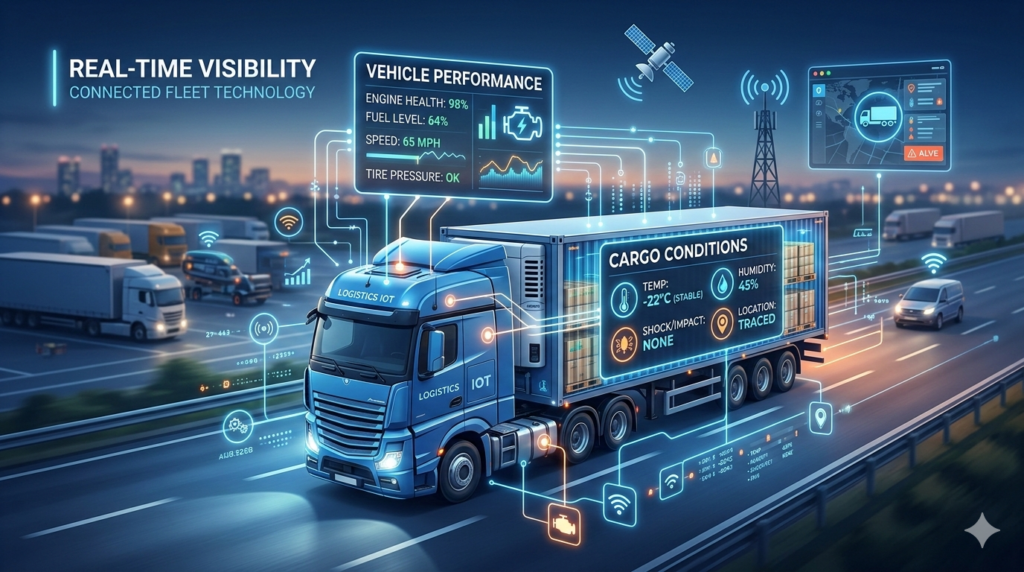
IoT sensors provide real-time visibility into vehicle performance and cargo conditions
Trend 4: Sustainability Optimization Through Carbon Intelligence
Environmental regulations tighten globally while customer pressure for sustainable logistics intensifies. Companies face carbon taxes, disclosure requirements, and competitive disadvantages if they cannot demonstrate environmental responsibility.
Traditional software provides basic carbon reporting by multiplying miles traveled by emission factors. This simplistic approach offers no optimization guidance and frequently produces inaccurate estimates.
Modern platforms treat carbon reduction as an optimization objective equal to cost and service level:
Route Optimization for Emissions: Route optimisation algorithms consider vehicle type, load weight, road gradient, traffic conditions, and weather when calculating routes. The system identifies paths that minimize emissions even if they add slight distance. European logistics providers reduced per-package emissions by 22% while maintaining delivery speeds.
Modal Shift Recommendations: Machine learning analyzes shipment characteristics and suggests optimal transportation modes. The platform identifies shipments suitable for rail or sea rather than air freight, quantifying cost and carbon tradeoffs. Shippers shifting 12% of volume to lower-emission modes saved $4.7 million annually while reducing carbon output by 34,000 tons.
Load Consolidation for Efficiency: Intelligent algorithms identify consolidation opportunities that reduce total vehicle movements. By combining shipments headed to similar destinations, companies decrease fleet size requirements and associated emissions.
Electric Vehicle Integration: As fleets transition to electric vehicles, optimization becomes more complex. Algorithms must consider charging infrastructure locations, battery range limitations, charging times, and electricity costs. The platform calculates optimal routes and charging schedules that maintain service levels while maximizing electric vehicle utilization.
A sustainability-focused logistics provider in the Middle East implemented carbon optimization across their network. The platform analyzed 2.4 million delivery scenarios monthly to identify emission reduction opportunities. Over 18 months, they achieved 29% lower carbon intensity while simultaneously reducing operating costs by 14%. This dual benefit demonstrates that sustainability and profitability are not competing objectives when approached intelligently.
Trend 5: Demand Sensing Through Advanced Analytics and External Data Integration
Accurate demand forecasting is essential for inventory positioning, capacity planning, and network optimization. Traditional forecasting methods examine historical order patterns and apply statistical techniques to project future volumes. These approaches fail to capture market dynamics, competitive actions, or emerging trends.
Modern demand sensing integrates diverse data sources:
Economic Indicators: GDP growth rates, employment statistics, consumer confidence indices, and currency fluctuations all influence purchasing behavior. Machine learning models incorporate these macro trends into demand predictions.
Weather Patterns: Temperature forecasts, precipitation predictions, and seasonal variations significantly impact product demand. Retailers using weather-integrated forecasting reduce stockouts by 23% while decreasing excess inventory by 19%.
Social Media Sentiment: Natural language processing analyzes social media conversations to detect emerging trends, brand perception shifts, and competitor activities. Early warning signals enable proactive inventory adjustments.
Promotional Calendars: The system tracks planned marketing campaigns, competitor promotions, and historical promotional effectiveness to predict demand surges accurately.
Supply Chain Signals: Supplier lead times, production schedules, and inbound shipment tracking provide early indicators of product availability that impact demand patterns.
Ecommerce businesses operating across multiple markets face particularly complex forecasting challenges. Cultural differences, regional preferences, and local events create diverse demand patterns that traditional software handles poorly.
A multi-national retailer serving North America, Europe, and the Middle East implemented advanced demand sensing. The platform processes 8.2 million external data points daily alongside internal sales history. Forecast accuracy improved from 71% to 94%, enabling inventory reduction of $47 million while simultaneously increasing product availability by 12 percentage points.
The operational impact extends beyond inventory management. Accurate demand forecasts enable optimized capacity planning, preventing both idle resources during slow periods and emergency overflow costs during surges. Transportation costs decreased 16% through better alignment of capacity with actual requirements.
Trend 6: Autonomous Last Mile Delivery Orchestration
Last mile delivery represents 53% of total logistics costs while creating the most direct customer impact. Traditional delivery management software provides basic dispatching and tracking functionality but lacks intelligence to optimize this complex, dynamic environment.
Modern platforms apply sophisticated algorithms to last mile challenges:
Dynamic Delivery Windows: Rather than offering fixed time slots, the system calculates optimal delivery windows based on route efficiency, customer preferences, and network constraints. Customers receive personalized options that balance convenience with operational efficiency. Acceptance rates increase 34% compared to rigid time windows.
Predictive Customer Availability: Machine learning analyzes delivery history, customer communication patterns, and contextual signals to predict when recipients will be available. Failed delivery attempts decrease by 46%.
Flexible Fulfillment Options: The platform evaluates multiple fulfillment strategies for each order: direct delivery, locker placement, retail pickup, or neighbor delivery. Autonomous selection of optimal methods reduces costs by 23% while improving customer satisfaction scores.
Real-Time Route Adjustment: As traffic conditions change, urgent orders arrive, or delivery exceptions occur, routes continuously reoptimize. Drivers receive updated instructions every 6-8 minutes, ensuring maximum efficiency despite dynamic conditions.
Gig Worker Integration: The system orchestrates combination of dedicated fleet and on-demand drivers, automatically determining optimal mix based on volume forecasts, service requirements, and cost constraints.
Delivery density significantly impacts last mile economics. Traditional software treats each delivery independently, missing opportunities for strategic sequencing and clustering. Machine learning platforms identify micro-patterns: apartment complexes with predictable access times, neighborhoods with high delivery success rates, commercial zones requiring specific delivery windows.
A Dubai-based quick commerce provider processes 180,000 weekly deliveries across a dense urban environment. Their traditional system achieved 12 deliveries per driver per shift. After implementing intelligent orchestration, productivity increased to 19 deliveries per shift—a 58% improvement without adding vehicles or staff. Customer satisfaction scores rose from 4.2 to 4.7 out of 5.0.
The transformation extends beyond metrics. Drivers receive mobile applications powered by natural language processing that answer questions, provide navigation assistance, and offer delivery guidance in real-time. This support system reduces training requirements by 60% while improving new driver productivity by 42%.
The Compounding Cost of Traditional Software
Organizations maintaining legacy logistics platforms face accelerating disadvantages:
Technology Debt Accumulation: Traditional systems require custom integrations, manual workarounds, and extensive IT support. These costs compound annually as business requirements evolve beyond platform capabilities.
Competitive Displacement: While traditional software users optimize incrementally, machine learning platforms improve exponentially. The performance gap widens monthly, eventually reaching a point where competitive parity becomes impossible without platform replacement.
Talent Retention Challenges: Skilled logistics professionals prefer working with modern tools that eliminate tedious manual tasks. Companies using outdated software face higher turnover and recruitment difficulties.
Customer Expectation Gaps: Market leaders set service level expectations that traditional software cannot meet. Companies fall behind on delivery speed, tracking accuracy, communication quality, and flexibility.
Missed Revenue Opportunities: Intelligent platforms enable service offerings impossible with legacy systems: same-day delivery, precise time windows, flexible fulfillment options, carbon-neutral shipping. These premium services command higher margins and attract valuable customer segments.
Strategic Blindness: Traditional systems provide historical reporting but lack predictive analytics to guide strategic decisions. Leaders make choices based on outdated information rather than forward-looking insights.
A comprehensive analysis by independent consultants compared logistics providers using traditional software versus modern platforms across identical market conditions. The modern platform users achieved:
- 27% lower operating costs
- 19% higher delivery volumes with same fleet size
- 34% better on-time performance
- 41% higher customer satisfaction scores
- 52% fewer delivery exceptions
- 63% reduction in manual dispatcher interventions
These performance gaps translate directly to market share, profitability, and enterprise value.
Implementation Roadmap: Moving Beyond Traditional Software
Transitioning from legacy platforms to modern logistics technology requires strategic planning:
Phase 1: Assessment and Baseline Establishment
Document current performance metrics, identify pain points, and quantify improvement opportunities. Establish baseline measurements for cost per delivery, on-time performance, vehicle utilization, and customer satisfaction.
Phase 2: Pilot Program Deployment
Implement new platform for a defined network segment, typically 15-20% of total volume. This approach validates performance improvements while limiting implementation risk. Most organizations see measurable results within 6-8 weeks of pilot launch.
Phase 3: Expansion and Optimization
Gradually expand platform coverage while refining configurations based on pilot learnings. Machine learning models require 3-4 months of operational data to reach full optimization potential.
Phase 4: Advanced Capability Activation
Activate sophisticated features like predictive analytics, autonomous decision-making, and strategic optimization. These capabilities build on foundation established in earlier phases.
Organizations following this roadmap typically achieve ROI within 7-9 months, with continued performance improvements extending years beyond initial implementation.
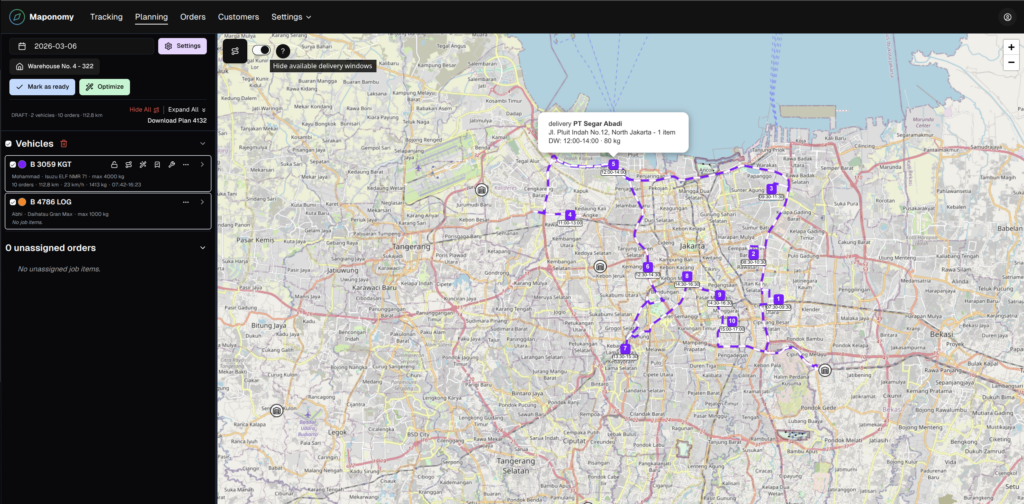
Why Maponomy Represents the Future of Logistics Technology
Maponomy delivers comprehensive logistics optimization through generative models, real-time IoT integration, and continuous learning algorithms. Unlike traditional software that requires manual configuration and periodic updates, Maponomy autonomously adapts to changing business requirements.
The platform provides:
Unified Optimization: Single system managing route planning, carrier selection, capacity planning, and last mile orchestration with seamless data flow and coordinated decision-making.
Real-Time Intelligence: Processing live data from IoT sensors, traffic systems, weather services, and customer communications to enable dynamic optimization.
Predictive Capabilities: Machine learning models that forecast demand, predict exceptions, and identify optimization opportunities before they become visible through traditional metrics.
Autonomous Operations: Intelligent automation handling routine decisions and exception resolution, freeing human expertise for strategic initiatives.
Continuous Improvement: Systems that learn from every delivery, every route, and every decision, creating compound optimization gains impossible with static software.
Companies across North America, Europe, and the Middle East rely on Maponomy to transform their logistics operations from cost centers into competitive advantages.
Tags: Supply Chain Trends, Logistics Optimization, Last Mile Delivery, AI Logistics, Machine Learning, IoT, Generative Optimization, Route Planning, Transportation Management, Middle East Logistics, North America Shipping, Ecommerce Fulfillment, Quick Commerce, Carbon Reduction, Predictive Analytics, Fleet Management
For regular insights on logistics technology and supply chain innovation, follow Maponomy on LinkedIn.
Special Credits to Gemini AI for image generation, Gartner, Bloomberg.