

Navigating the Future of Commercial Transport, AIS-140 Compliance, and AI-Driven Logistics
The global logistics and supply chain landscape has undergone a tectonic shift over the last decade. As we navigate through 2026, the demands placed on commercial fleets ranging from long-haul trucks to hyper-local delivery vans have never been higher. E-commerce expectations have compressed delivery windows, fuel costs continue to fluctuate, and governments worldwide are imposing stricter safety and environmental regulations. At the heart of solving these complex challenges is the modern Fleet Management System (FMS), heavily augmented by advanced GPS technologies. This blog delves into the core of FMS, the evolved role of GPS devices, India’s stringent AIS-140 regulatory framework, and how enterprise solutions like Maponomy are revolutionizing the space.
Understanding the Fleet Management System (FMS)
A Fleet Management System is a comprehensive digital ecosystem designed to oversee, organize, and optimize a company’s commercial vehicles. In 2026, an FMS is no longer just a digital map showing vehicle locations; it is a central nervous system powered by Artificial Intelligence (AI), the Internet of Things (IoT), and cloud computing. It integrates telemetry data from vehicles to provide actionable insights into every aspect of fleet operations.
Modern FMS platforms handle a myriad of tasks. They monitor driver behavior, tracking aggressive acceleration, harsh braking, and cornering, which directly impacts safety and fuel consumption. They automate maintenance schedules by pulling real-time engine diagnostic data, predicting failures before a breakdown occurs on the highway. Furthermore, FMS handles route optimization, compliance reporting, dispatch coordination, and temperature monitoring for cold-chain logistics. The ultimate goal of a Fleet Management System is to reduce total cost of ownership (TCO), enhance operational efficiency, ensure regulatory compliance, and guarantee passenger and cargo safety.
The Evolved Role of GPS Devices in Modern Logistics
The phrase “GPS tracking” used to imply a simple dot moving across a two-dimensional map. In 2026, the GPS device (often referred to as a Vehicle Location Tracking Device or VLTD) is a highly sophisticated hardware node within the IoT network. The role of GPS devices has expanded beyond basic geolocation to become the primary conduit for vehicle telemetry.
More Than Just Location
Today’s GPS devices utilize multi-constellation Global Navigation Satellite Systems (GNSS), combining traditional GPS with regional networks like India’s NavIC to achieve pinpoint accuracy within a few meters, even in dense urban canyons or remote terrains. Furthermore, these devices act as centralized communication hubs within the vehicle, bridging data from Engine Control Units (ECUs), smart dashcams, and environmental sensors back to the fleet manager’s dashboard via 4G/5G cellular networks.
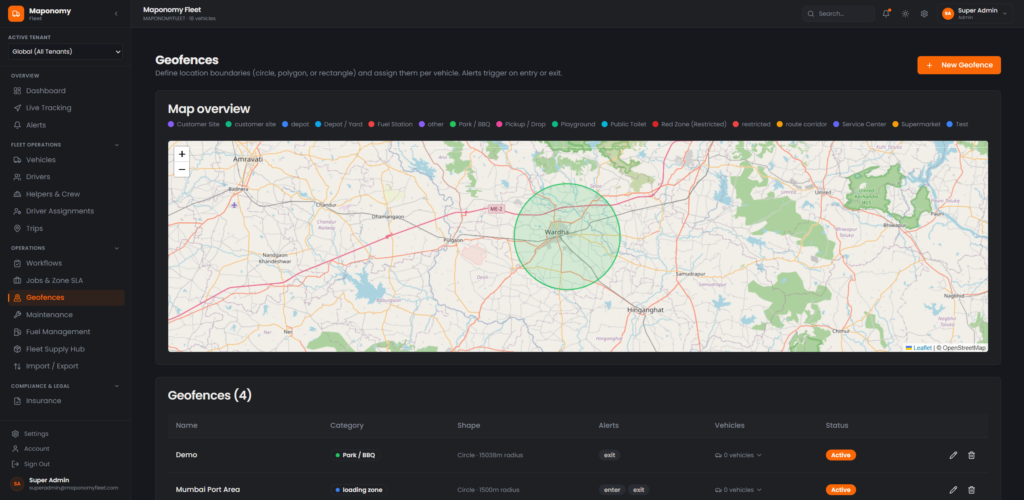
In modern logistics, GPS devices enable dynamic route planning. If a truck encounters unexpected traffic or road closures, the GPS feed allows the centralized FMS to instantly reroute the vehicle, minimizing delays. They also play a critical role in geofencing, triggering automated alerts when a vehicle enters or exits a predefined zone, which is vital for warehouse readiness and theft prevention. The modern GPS device is the indisputable foundation of supply chain visibility.
Latest Government of India Guidelines for GPS Devices: The AIS-140 Standard
In India, the role of GPS in commercial transport has been fundamentally reshaped by government mandates. The Automotive Industry Standard 140 (AIS-140) is not merely a recommendation; as of 2026, it is a strict regulatory requirement for public and commercial vehicles operating across the country. Originating from passenger safety initiatives funded under the Nirbhaya framework, AIS-140 has evolved into a robust compliance standard overseen by the Ministry of Road Transport and Highways (MoRTH) and the Automotive Research Association of India (ARAI).
The AIS-140 mandate shifts the paradigm from private operational tracking to mandatory public safety and regulatory integration. It requires specific hardware capabilities and real-time data sharing with state-run infrastructure.
Key Compliance Requirements of AIS-140 in 2026
- Dual Constellation GNSS: Devices must support both standard GPS and NavIC (the Indian Regional Navigation Satellite System built by ISRO) to ensure high reliability and a minimum position accuracy of 5 meters CEP.
- Simultaneous Data Transmission: Unlike standard trackers that ping a private server, an AIS-140 certified VLTD must transmit data over dual IP addresses simultaneously sending telemetry to the fleet’s private backend and the government’s VAHAN and National Vehicle Location Tracking (NVLT) servers.
- Emergency Panic Buttons: A core component of the mandate is passenger safety. Vehicles must be fitted with hardwired physical SOS buttons. When pressed, the device must immediately transmit an emergency alert to government Command & Control Centers, bypassing the standard 30-second ping interval.
- Hardware Resilience & Battery Backup: The device must have a built-in battery backup of at least 4 hours. It must continue transmitting tamper alerts and location data even if the vehicle’s primary power is disconnected by malicious actors. Furthermore, devices must pass rigorous ARAI/ICAT testing for vibration, shock, IP67 waterproofing, and extreme temperature endurance.
- Embedded M2M eSIMs: Removable SIM cards are prohibited. Devices must utilize embedded M2M eSIMs from approved telecom providers with multi-network fallback (4G LTE with 3G/2G fallback) to ensure continuous connectivity.
By 2026, the grace periods and phased rollouts for AIS-140 have largely concluded. Enforcement is strictly digital. Commercial vehicles including trucks above 3.5 tons, taxis, school buses, and emergency vehicles that lack an ARAI-certified, VAHAN-registered VLTD face immediate consequences. State Regional Transport Offices (RTOs) are actively denying fitness certificate renewals, suspending permits, and levying heavy fines at checkpoints for non-compliance. AIS-140 has transformed GPS from an optional business tool into an operational license to drive on Indian roads.
Transforming Logistics with Maponomy.com
As regulatory frameworks tighten and logistical complexities mount, enterprises require software solutions that can seamlessly integrate hardware telemetry with intelligent workflow management. This is where Maponomy a SaaS and API business unit of Potters Technologies, steps in. Maponomy is built exclusively to digitize and optimize fleet and logistics operations, leveraging IoT and AI to drive down costs and maximize capacity.
Maponomy offers a comprehensive suite of tools that go far beyond standard dot-on-a-map tracking. It provides an end-to-end Transport and Fleet Management Platform designed to streamline the entire lifecycle of a shipment.
Core Offerings of Maponomy Fleet Management System
- Fleet Vehicle Creation
- Driver Creation, Vehicle Association, Driver And Helper Crew Assignment
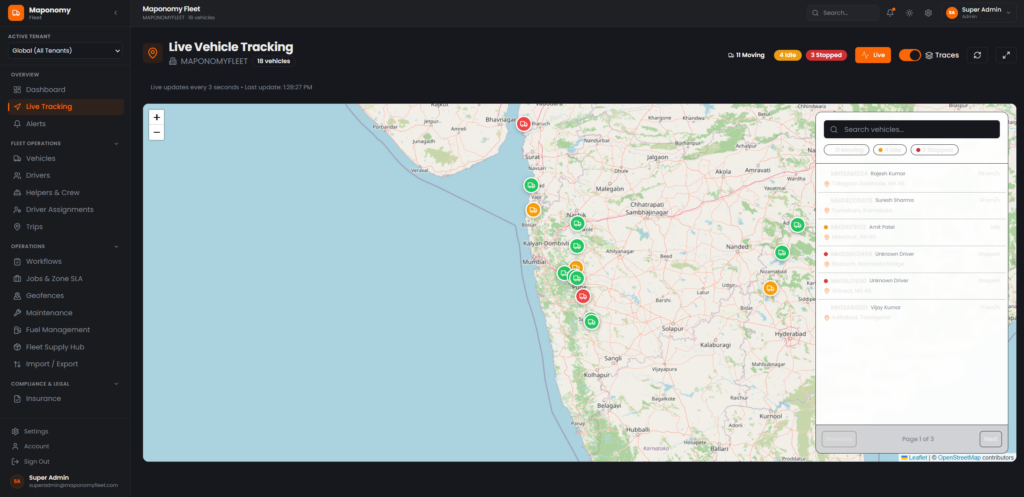
- Live Vehicle Tracking
- Multiple Customer Account Management
- Geofences For Location Based Control
- Alerts
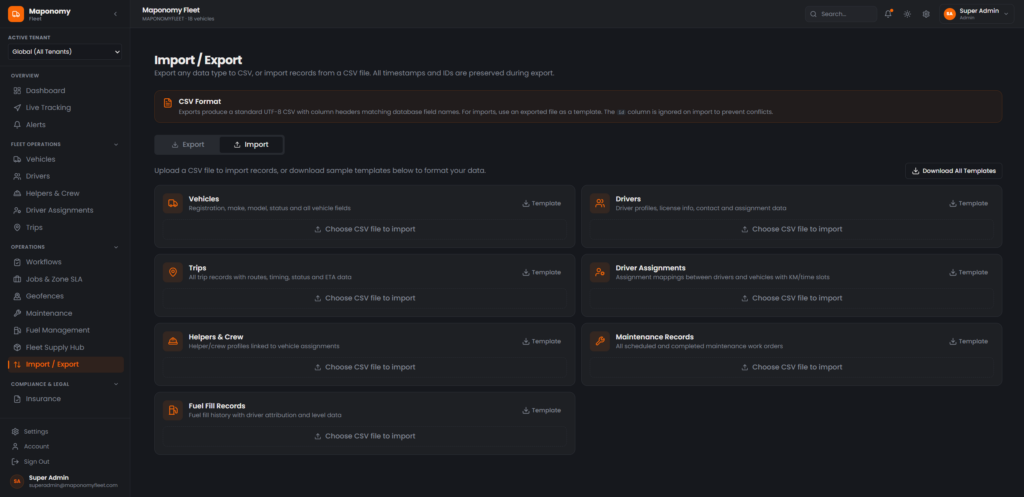
- Bulk Import And Export Of Orders & Data
- Trips And Dispatch Monitoring
- Jobs And Zone SLA Monitoring
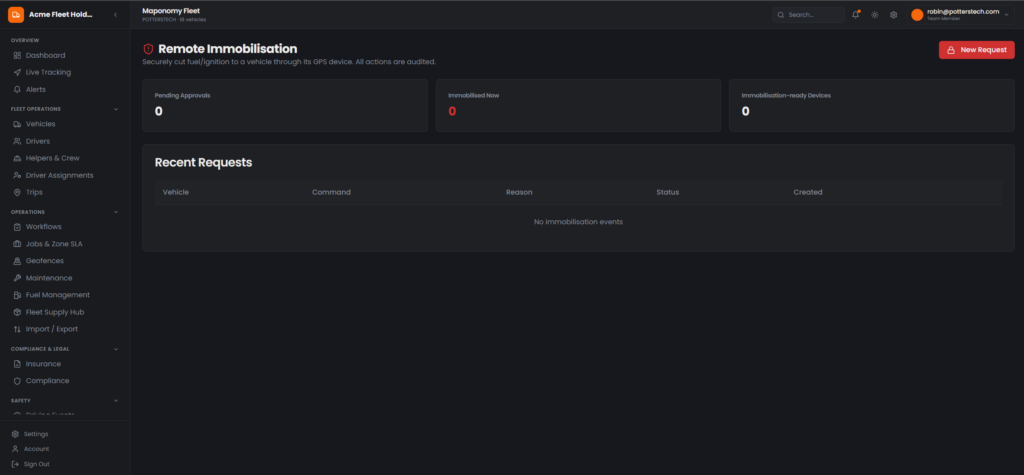
- Accident,Theft And Remote Immobilisation Control
- Marketplace For Different GPS Devices
Driver Assignment

Live
Vehicle Tracking
Geofences
Alerts
&
Notifications

Data Import &
Export
Theft &
Remote Immobilisation Control
GPS / Tracking
Device
Marketplace

Core Offerings of Maponomy Planner Suite
- Automated Dispatch Planner & Route Optimization: Maponomy utilizes AI-driven algorithms to auto-optimize routes based on distance, time, and constraints like vehicle capacity and delivery windows. The system dynamically schedules shipments, combining automation with manual flexibility to maximize truck utilization and minimize empty miles.
- Smart Dashcam & Streetview Navigation (Video Telematics): Enhancing safety and accountability, Maponomy integrates real-time dashcam footage with interactive streetview navigation. This gives logistics teams an on-the-ground view to verify delivery locations, monitor driver behavior, and ensure strict compliance with safety protocols.
- Load Builder: To maximize transportation network efficiency, Maponomy’s Load Builder intelligently plans how goods are packed into vehicles, ensuring maximum capacity utilization while adhering to weight limits and delivery sequencing.
- Driver/Courier Mobile App: Maponomy features a dedicated mobile application for company-assigned drivers. This mobile-first solution provides turn-by-turn navigation (factoring in tolls, ferries, and highway avoidance), offline sync capabilities, and digital proof-of-delivery (capturing e-signatures and photos). Drivers can seamlessly update order statuses, keeping dispatchers informed in real-time.
- Live Tracking & Collaborative Execution: The platform features a robust live tracking dashboard that not only tracks real-time vehicle location but allows enhanced stakeholder collaboration. Customers receive real-time notifications (“Track Your Shipment” alerts), drastically improving customer satisfaction and reducing support queries.
By unifying these features, Maponomy allows enterprises to manage their fleet efficiently, ensuring compliance, safety, and ultimate profitability in an increasingly competitive 2026 market.
Miscellaneous Use Cases for Maponomy Services
The versatility of Maponomy’s IoT and AI-driven platform allows it to be leveraged across a wide array of industries beyond traditional freight transport. Here are several miscellaneous use cases where enterprises can harness Maponomy’s capabilities:
- E-commerce and Last-Mile Delivery: In the fast-paced world of e-commerce, meeting tight SLA deadlines is paramount. Maponomy’s dynamic routing and proof-of-delivery app ensure that couriers take the most efficient paths, verify deliveries digitally, and keep the end-consumer updated with live tracking links.
- Passenger Transit & Corporate Commute: For companies running employee transport fleets or inter-city bus services, Maponomy ensures route efficiency while prioritizing safety. Integration with AIS-140 compliant devices ensures that panic button alerts and live feeds are seamlessly monitored.
- Cold Chain & Perishables Logistics: Transporting pharmaceuticals, fresh produce, or dairy requires strict temperature control. Maponomy’s IoT data integration can track environmental sensors in real-time, sending automated alerts to dispatchers if cargo temperatures deviate from safe zones, thereby preventing spoilage.
- Construction & Heavy Equipment Routing: Moving heavy machinery requires specialized route planning to avoid low bridges, weight-restricted roads, or unsuitable terrain. Maponomy’s dispatch planner can accommodate specific vehicle profiles, ensuring safe and legal transport of oversized loads.
- Field Service Management: For utility companies or home-service providers (HVAC, plumbing), Maponomy can be used to dispatch the nearest available technician to an emergency call. The mobile app logs arrival times and job completion, while the dashboard provides managers with a bird’s-eye view of field workforce productivity.
Conclusion
In 2026, the Fleet Management System has transcended its origins to become an indispensable intelligent layer of the global supply chain. Fueled by multi-constellation GPS devices and stringent regulatory frameworks like India’s AIS-140, fleets are operating with unprecedented transparency and safety. Platforms like Maponomy stand at the forefront of this revolution, providing the critical AI, routing, and telematics tools required to turn raw location data into maximized capacity, minimized costs, and superior operational efficiency. For modern enterprises, embracing these integrated digital solutions is no longer a competitive advantage, it is a fundamental requirement for survival and growth.
Sources and Credits
The information in this article has been compiled and referenced from the following authoritative sources in the logistics, telematics, and regulatory domains:
- Intangles AI: AIS-140 GPS Tracking Mandate for Commercial Fleets 2026
- Binary Semantics: AIS 140 Compliance Guide for Fleet Operators in India (2026)
- Navionyx: AIS-140 Compliance in India: VLTD Guide for Fleet Operators
- Fleetx: AIS 140 Update 2026: New Enforcement Rules
- Maponomy Official Portal: Maponomy Transport Management & Logistics Platform
- Maponomy Apple App Store: Maponomy Mobile App for Drivers & Couriers
- Maponomy Google Play Store: Maponomy Mobile App for Drivers & Couriers
Note: This content reflects regulatory frameworks and technological advancements accurate as of Q3 2026. Enterprises are advised to consult their state RTOs for specific AIS-140 deployment notifications.